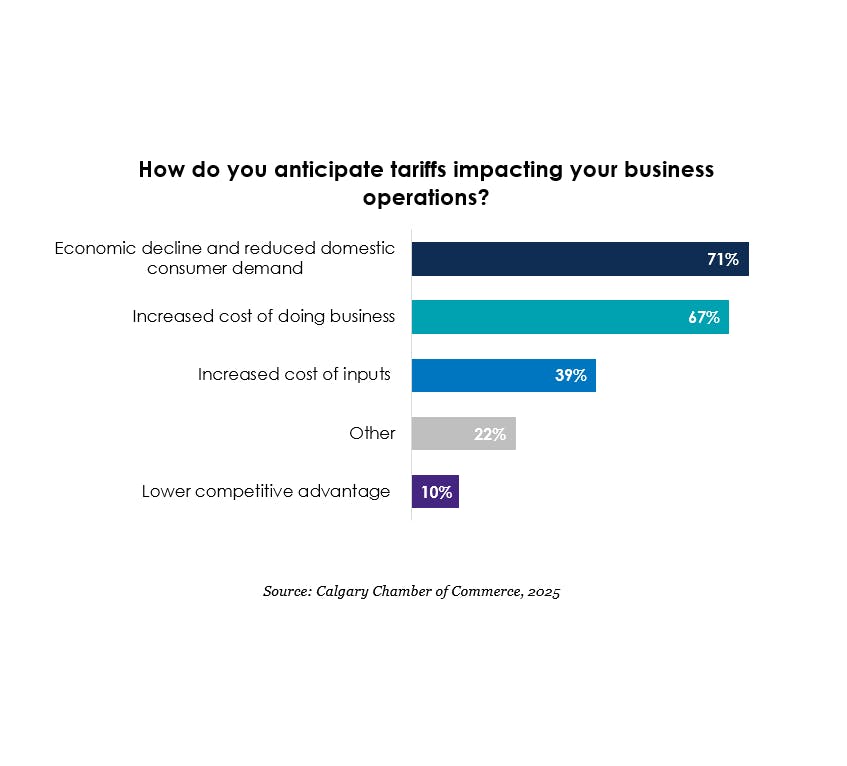

A recent survey shared with our members revealed 85% of members expect a significant impact on their operations due to tariffs driven by reduced consumer confidence and demand poor economic conditions.
The ongoing tariff situation with our largest trading partner – the United States – is both rapidly changing and deeply impacting businesses across size and sector.
To better understand the anticipated impact on Calgary businesses, the Calgary Chamber launched a survey to our membership in early March. We asked how businesses believe they may be impacted by tariffs, what information they might need to navigate the everchanging trade landscape, and what policy solutions our membership would like Canadian governments to prioritize.
Tariffs expected to affect nearly all businesses
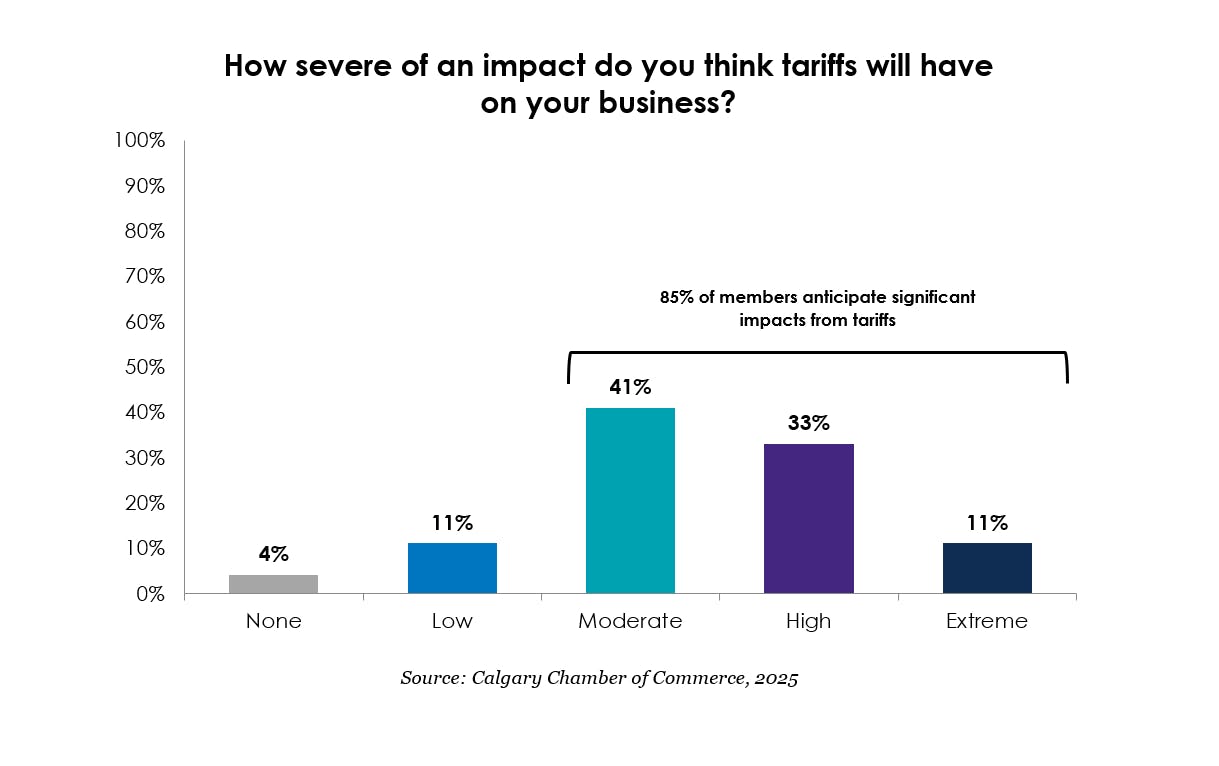
Overwhelmingly – and not unexpectedly – Calgary’s business community anticipates significant impacts from the imposition of tariffs. Results showed that 44 per cent of respondents believe that tariffs will have a high or extreme impact on their business, compared to only 15 per who expect low or no impact from tariffs.
If the tariff situation persists, some sectors are likely to be more impacted than others. Energy, automobile and vehicle manufacturing, and aluminum production all send more than 90 per cent of their exports to the United States. Small businesses, which account for 42 per cent of Canadian exports to the U.S., will also be heavily impacted, as they often have fewer resources and a smaller buffer to absorb major shocks. Lastly, discretionary sectors such as retail and hospitality may feel a disproportionate impact, with Canadians pulling back on spending in light of economic concerns and lower consumer confidence.
The tariffs are impacting not only bottom lines directly but are also impeding consumer confidence and economic conditions. The combination of the cost of U.S. tariffs, the cost of retaliatory tariffs, heighted inflation and depressed consumer confidence are all challenging for businesses to navigate – however two-thirds (66%) of our members are most concerned with a possible recession or inflation broadly, indicating the knock-on effects of tariff threats may be more challenging than the tariffs themselves.